What Is the Difference Between Wet and Dry Paint Protection Film Installation?
Anyone shopping for paint protection film in El Cajon will eventually hear installers talk about wet and dry application. These terms may sound technical, but the method used to apply the film affects how accurately it sits on the paint, how the adhesive bonds, and how clean the finished panel looks from every angle. Understanding wet vs. dry PPF installation helps vehicle owners ask better questions before booking an installation. This guide covers how both methods work, their advantages and limitations, and why professionals choose a technique based on the film and the vehicle.
How Wet PPF Installation Works
Wet installation is the method most people picture when they imagine paint protection film being applied to a vehicle. It has long been a standard approach across the industry. The installer uses a liquid solution to control how the film moves across the paint before securing it in place. Understanding the role of the solution, its advantages, and its limitations helps explain why professionals continue to use this method.
The Role of the Slip Solution
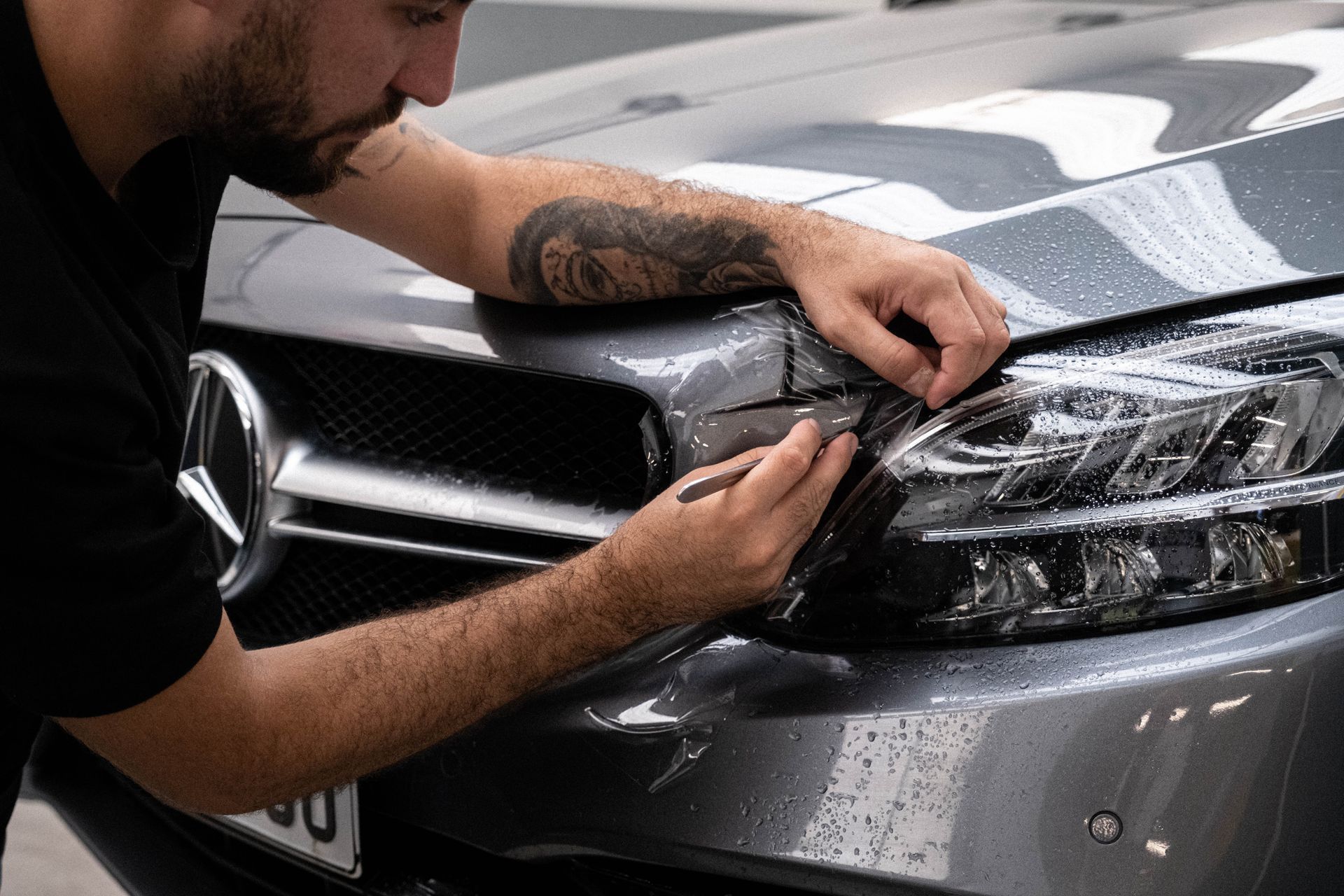
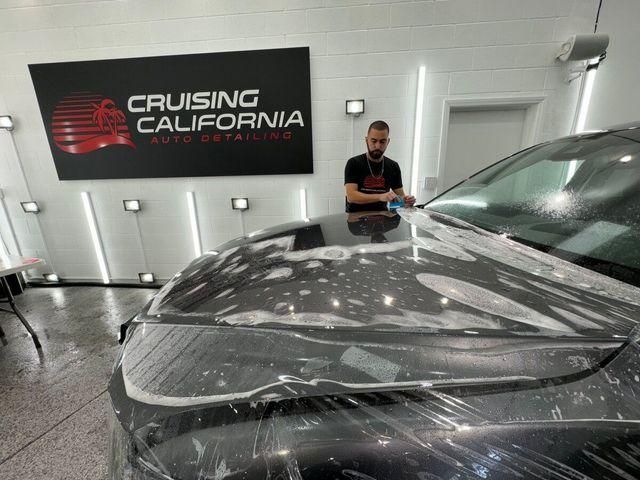
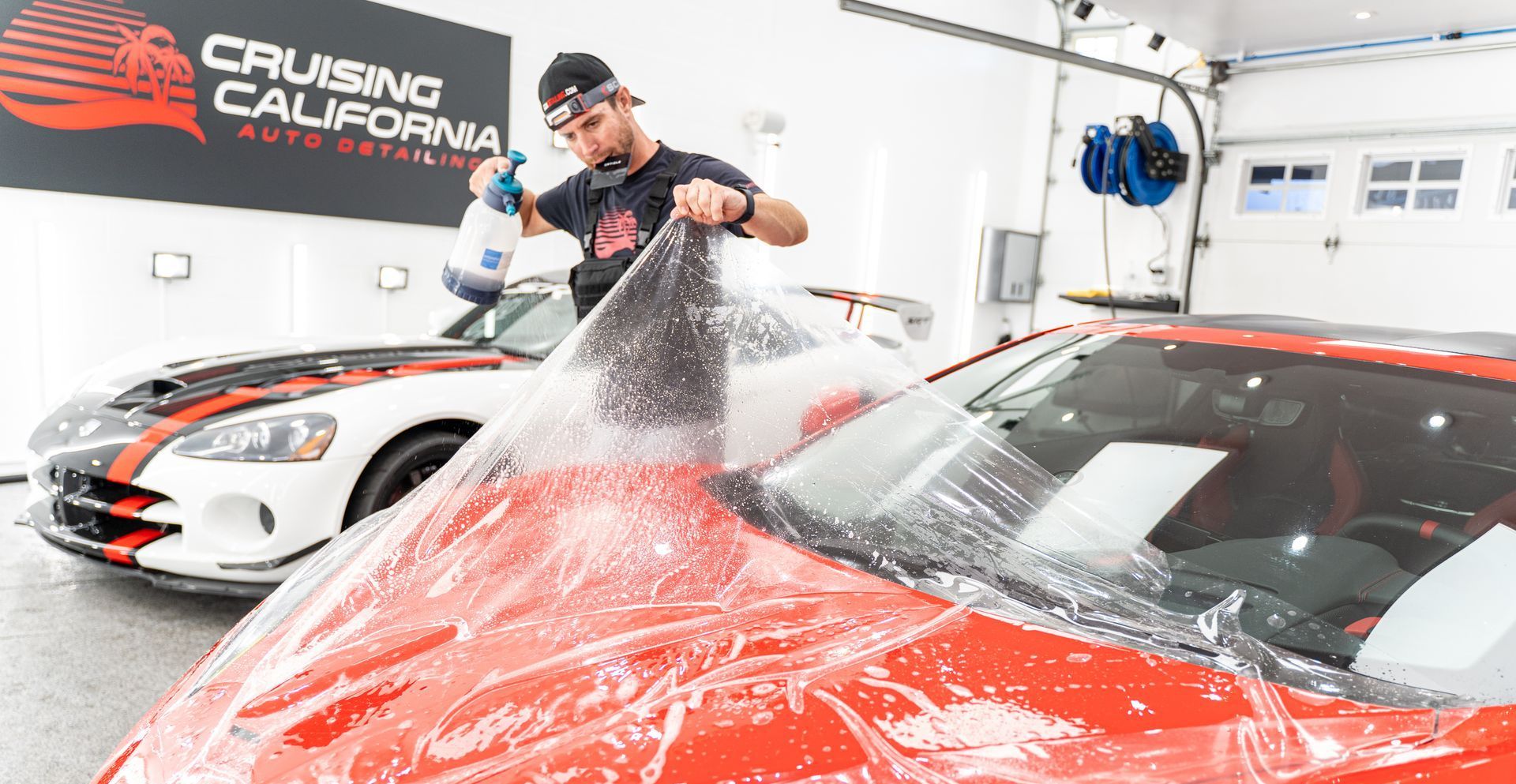
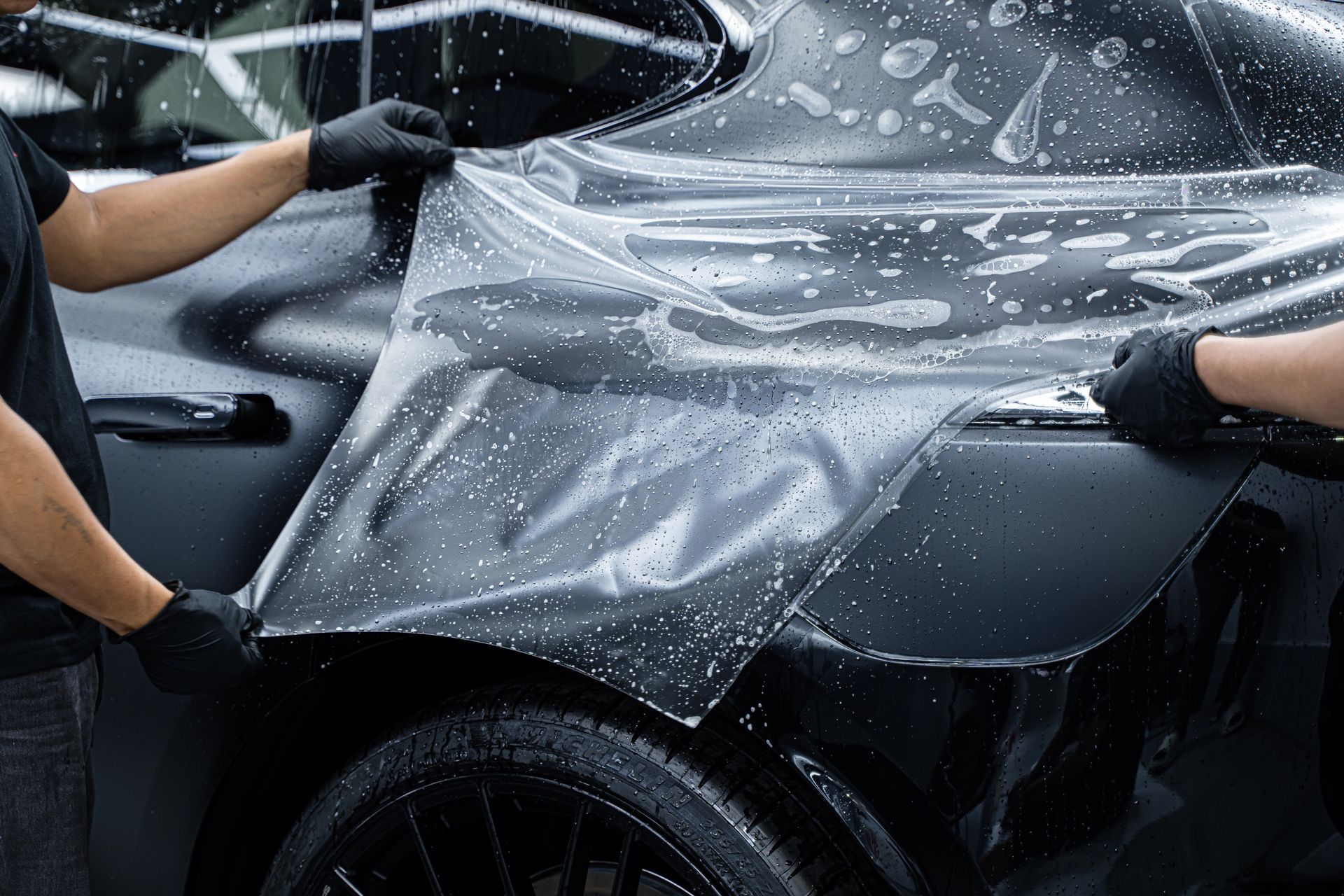
In a wet installation, the installer sprays a slip solution, usually a mixture of water and a small amount of mild soap, onto the painted surface and the adhesive side of the film. This thin layer of liquid prevents the adhesive from grabbing the paint immediately, allowing the installer to float the film into position, slide it across the panel, and adjust the edges. Once the placement looks right, a squeegee pushes the solution out from beneath the film, allowing the adhesive to bond gradually as the remaining moisture evaporates. When performed correctly, this process provides control during placement and helps create a firm, even bond.
Advantages of the Wet Method
The biggest advantage of wet installation is flexibility. Because the film can be lifted and repositioned while the solution is present, installers have room to correct alignment around bumpers, mirrors, fender curves, and hood edges. This flexibility is especially useful on large panels and body lines with complex contours, where even a small shift can leave a visible gap or uneven edge. The lubrication also reduces the chance of creasing as the film is initially applied, giving installers better control throughout the process. On vehicles with several curved panels, this additional adjustment time can contribute to a cleaner, more seamless finish.
Limitations of the Wet Method
Wet installation requires patience and careful technique. If moisture is not squeezed out thoroughly, small pockets of solution can remain beneath the film and appear as haze or tiny bubbles until they evaporate. The adhesive also needs time to settle and cure, so a vehicle may show slight distortion during the first few days after application. Installers must maintain a clean working environment because airborne contaminants can mix with the solution and become trapped between the film and paint if the process is rushed. These challenges are manageable, but they demonstrate why wet installation requires experience and a well-controlled shop environment.
How Dry PPF Installation Works
Dry installation takes a different approach by removing liquid from the application process entirely. Instead of using a slip solution to allow adjustments, this method depends on the way the film's adhesive is engineered to behave when it comes into direct contact with the surface. Understanding the adhesive technology, advantages, and limitations explains why dry application is not suitable for every type of paint protection film. Paint protection film installation requires careful handling of the film's adhesive to ensure proper positioning and a smooth finish.
Specialized Adhesive Technology
Dry application uses films designed with adhesive systems that can be applied directly to clean paint without a liquid layer. The adhesive is formulated to make controlled contact with the surface, allowing the installer to position and secure the film using careful pressure rather than a lubricating solution. Since nothing is sprayed between the film and the paint, placement must be planned in advance, often using pre-cut patterns and accurate reference points. The installer works methodically, positioning the film correctly and securing it with deliberate, even pressure. This makes dry application closely dependent on the film itself, as its adhesive technology determines whether the method is suitable.
Advantages of the Dry Method
One of the main advantages of dry installation is the absence of trapped moisture. Since no solution is used, there is no liquid that needs to evaporate from beneath the film, which can simplify the settling period for certain products. The process can also provide a cleaner and more predictable application because fewer variables are introduced between the adhesive and the paint. When the film and panel are properly prepared, direct contact can support a tight, uniform bond and a consistent finish along the edges. However, these benefits depend on choosing a suitable film and having an experienced installer perform the application.
Limitations of the Dry Method
The main limitation of dry installation is that it leaves very little room for error. Without a slip solution, repositioning is limited, making accurate alignment essential from the moment the film touches the paint. The method also requires a spotless, fully prepared surface because even a small particle of dirt or residue can remain trapped beneath the film. Additionally, not every paint protection film is designed for dry application. Using this method on a product intended for wet installation can compromise adhesion and the finished appearance. For this reason, dry installation is generally reserved for situations where the film's adhesive technology and surface conditions support the process.
A Step-by-Step Approach to Quality PPF Application
Professional paint protection film installation involves several carefully managed stages to achieve accurate placement and a clean finish. The process begins with thorough surface preparation to remove loose dirt and embedded contaminants from the vehicle's paint. Next, the film is measured and manually trimmed according to the vehicle's specifications, body lines, and natural curves. During adhesive application, a lubricating solution helps the installer position the film accurately, while a squeegee removes trapped air and excess solution. The final stage involves finishing and curing, allowing the material to establish a secure connection with the paintwork. Each stage requires attention to detail to support consistent coverage and reliable application quality.
Wet vs. Dry PPF Installation: Key Technical Differences
Wet vs. dry PPF installation differs mainly in how each method handles alignment, adhesion, and application precision. Wet installation uses a slip solution that allows installers to slide the film and adjust its position until the edges, seams, and contours are properly aligned. Dry installation, on the other hand, relies on careful planning and accurate placement at the moment of contact. The adhesive also behaves differently during both processes. With wet installation, bonding begins as the solution is pushed out with a squeegee and the remaining moisture evaporates. This is why the film may initially appear slightly hazy before becoming clear as it settles. In dry installation, the adhesive makes direct contact with the paint, allowing bonding to begin without liquid that needs to clear. Both methods require precision, but wet application focuses on controlling the squeegee and moisture, while dry application depends heavily on accurate first-time placement. Ultimately, both techniques can provide effective paint protection when matched with the appropriate film and performed by a trained installer.
How Professionals Choose the Right Installation Method
Experienced installers do not treat wet or dry installation as a personal preference. The decision begins with the film because every product is engineered with a particular adhesive system and recommended application method. A film designed for wet installation requires a slip solution to position properly and bond as intended, while a film developed for dry application relies on its adhesive system to work without liquid. Ignoring these requirements can result in poor adhesion, visible imperfections, or edges that lift over time. The vehicle's design also plays an important role. Panels with deep curves, sharp creases, or large surface areas may benefit from the adjustment flexibility provided by wet installation. Flatter and properly prepared areas may be suitable for dry application when the film allows it. Paint condition, surface cleanliness, and existing imperfections also influence how effectively the adhesive can hold. Professional installers examine each panel before selecting the technique, ensuring that the application method matches both the film's requirements and the vehicle's surface.
PPF Installation at CCA Detailing in El Cajon
Choosing the right installer is just as important as selecting the paint protection film, especially for El Cajon drivers who want lasting protection for their vehicle's paint. CCA Detailing offers paint protection film services, with the installation method selected according to the film and the vehicle rather than personal preference. Before beginning the application, the team considers the condition of the paint, the shape of the panels being covered, and the requirements of the film itself. This preparation helps ensure that the film sits accurately, bonds properly, and maintains a clean appearance from edge to edge. Vehicle owners can also ask their installer which application method will be used, why it is suitable for their vehicle, and what settling period to expect after installation. Clear communication helps customers understand the process and feel confident about protecting their vehicle. To explore the available options, visit the CCA Detailing Paint Protection Film page.
Final Thoughts on Wet vs. Dry PPF Installation
Wet and dry PPF installation are both established techniques, but neither method is suitable for every film or vehicle. Wet application uses a slip solution to give installers flexibility when positioning and adjusting the film, while dry application relies on specialized adhesive technology to create a bond without liquid. The most important factor is matching the installation method to the film's requirements and the vehicle's surface conditions. A skilled installer, proper preparation, and careful application all contribute to a professional finish. If you are ready to protect your vehicle's paint,
contact CCA Detailing in El Cajon to discuss your paint protection film installation options.